

CCAC: Year One (1991)
Finally free?
Happy New Year! Please enjoy today’s public post. I hope you’ll consider joining with a paid subscription to see new posts every weekday.
My first semester of art school. I remember--having left high school, which I was not particularly fond of--the sense of freedom and excitement I felt to finally be pursuing art single-mindedly, or nearly so. This was before the internet became a consumer thing, still. After considering a few art colleges like Cornish, Pratt, Art Center, Academy of Art in San Francisco, and the California College of Arts and Crafts (now just CCA) in Oakland, I applied only to the Bay Area ones. The primary reason was that art school--then as now--was almost as expensive as Ivy League schools, just in tuition. My parents both worked in factories of different kinds and managed to pull together a modest middle-class living, somehow, for their three sons. Their ability to help me financially was pretty limited. But I did not qualify for nearly enough financial aid to make leaving home possible, especially with living expenses. I could not move to the north or east bay to be close to school unless I funded much of it on loans, once dorms or off-campus housing was considered. So I stayed home and commuted from south San Jose to North Oakland 3-4 days a week for long class days. That was a challenge, but was a great decision as I left without crushing debt later. Being able to stay home was a primary way of my folks supporting me.
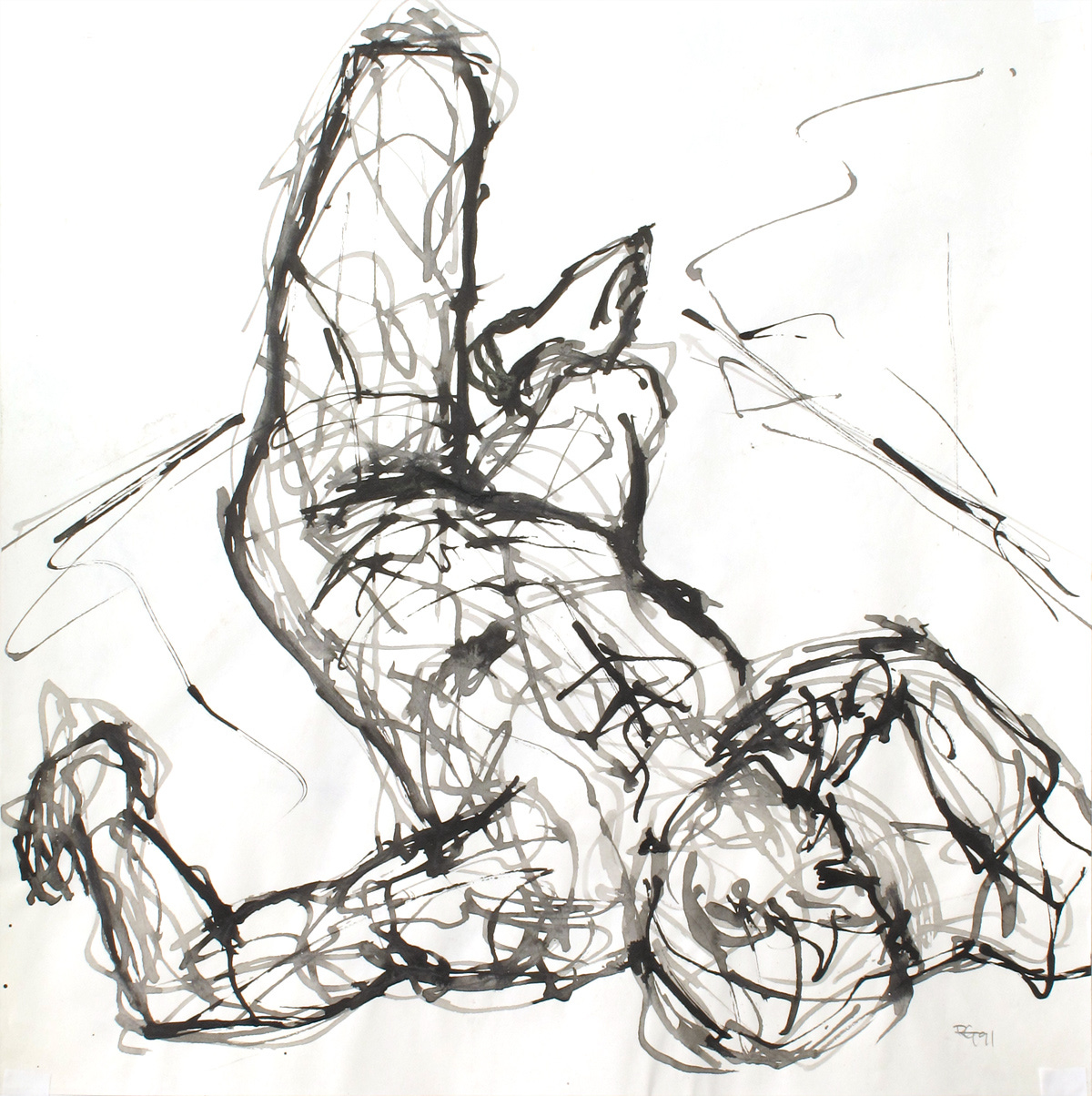
My first semester, I entered as I said full of exuberance, only to encounter Core Year. Core Year is the year you are tightly constrained to mostly mandated courses, meant to give you a cross-discipline foundation before you declare a major and specialize. Some of it was necessary: basic composition and materials, foundation drawing, foundation painting. Some of it was a waste, for me, like foundation 3d (sculpture, not digital). Some of it was useful: some humanities, art history.
My intro drawing class was a highlight of that first year. We were encouraged to try different methods and materials than I was used to up to that point, having worked essentially just in pencil, colored pencils, and some pointillist ink.
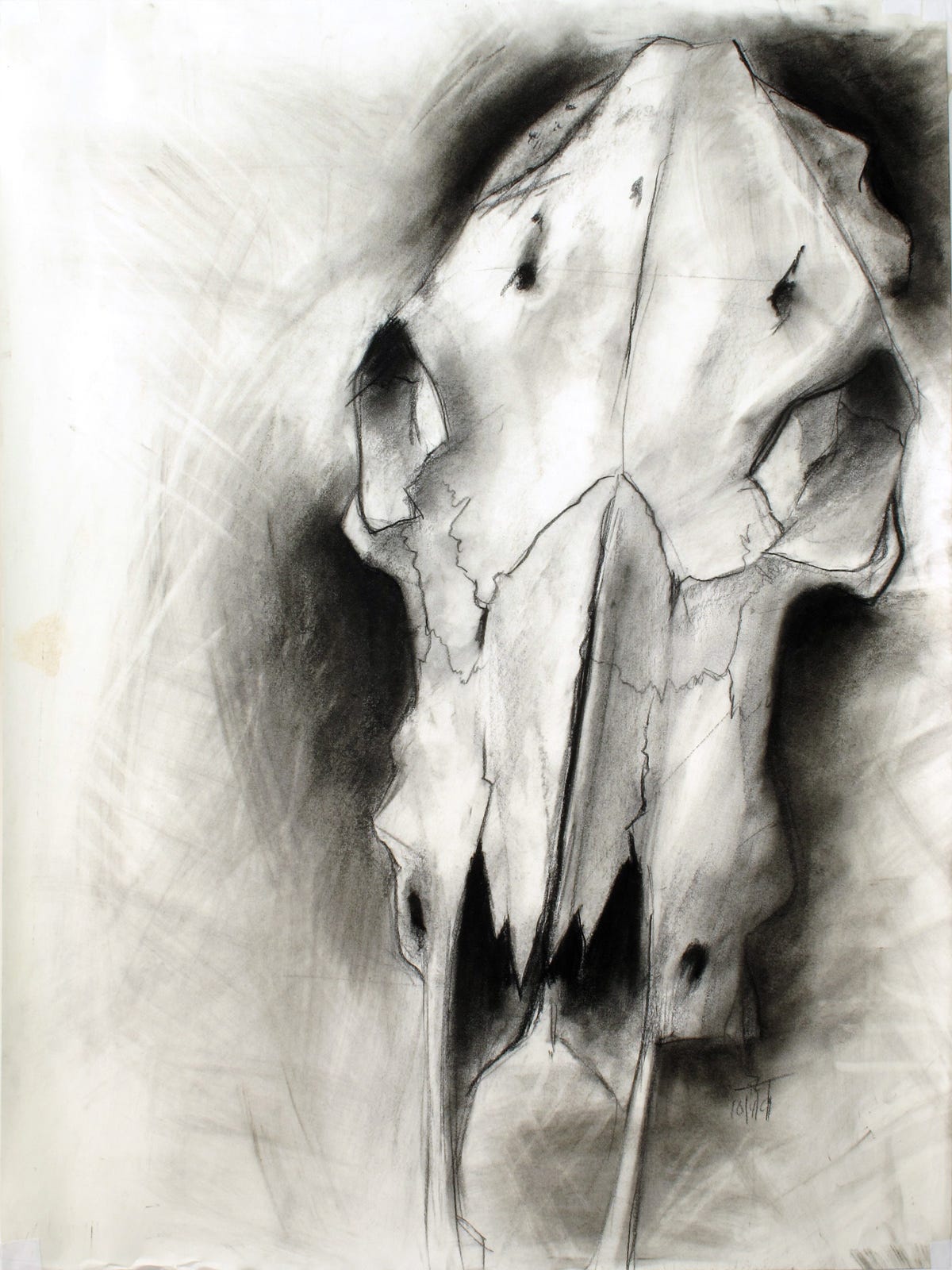
Much of the rest was frustrating, however. The 3d class wasn’t even an attempt to teach sculpture. It was exposure to materials and mostly abstract assignments and installations. For my purposes, a complete and expensive waste of time.
My intro painting class I started with much hope, but it ended up being largely a waste of money. It was by-and-large uninstructed. We would do still life paintings or figure paintings, or paint our own projects, and there was really nothing in the way of color theory, paint handling or materials instruction beyond learning how to stretch a canvas, and some forced exposure to some painting mediums. The instructor never painted with us to teach through demonstration, for instance. Up until then I was exclusively self-taught, but I hoped to be taught now. Sadly, that didn’t really start until my second year, so I made the best of my first year with the self-teaching. I was not confident enough in myself to question this method of “teaching” I was receiving or to insist on being taught actual, you know, things. Peer critiques were mostly useless, since no one else knew much either, yet. The blind leading the blind.
I trashed a lot of my student work when I got married and moved out of my folks’ house in 1998. You generate a ton of bad work in art school--you’re supposed to. So what I kept I guess I considered decent or notable for some reason.
In my painting intro class, we had a plaster cast I later came to learn was kinda famous. This painting was done I think in two sessions of maybe two hours each, or in one session but I repainted a bit more after it dried. You can tell because the profile around the cheek through underjaw was re-painted a bit, and ghosting remains. I painted it as it lay on a table, as the painting is shown. Later, I stood it upright and noticed the drawing errors, and corrected them. I also signed it in the vertical aspect, but I prefer it horizontal again.
It’s fascinating to look at my 16 or 17 year old self’s efforts here. It’s not bad, considering age. I’m half tempted to get a hold of this cast somehow again, to give it another go. Of note as well is that it is painted on basic-level canvas panel from any ol’ art store, with moderate thickness of student-grade paints, and is holding up very well, materially. I’m not surprised--I have a couple other panels that are 2-3 years even older that are holding up fine still.
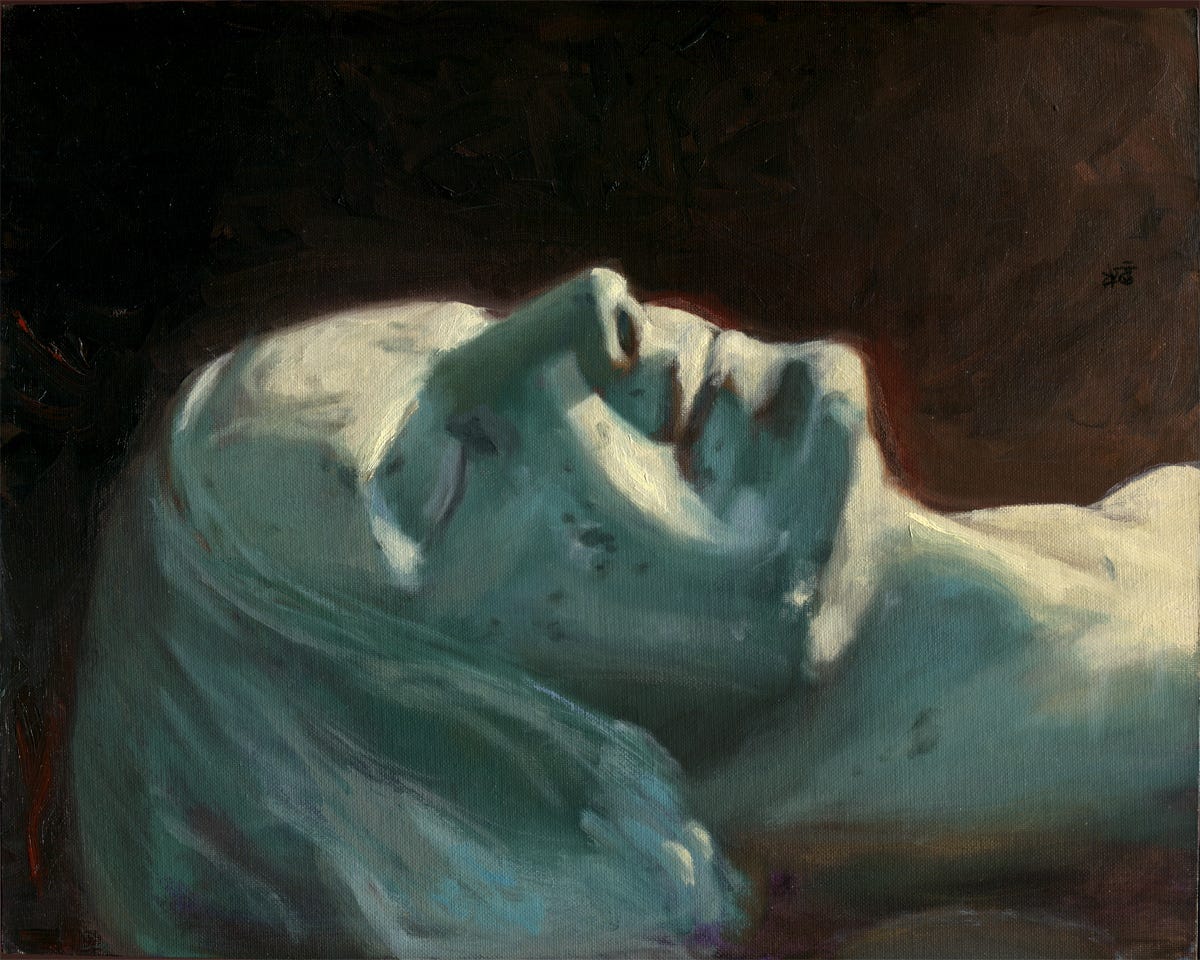
Why did I paint it so large? It’s about 1.5x life size. I can’t tell you, really. I think I had this idea that bigger was better for whatever reason. Or we were encouraged to paint or draw larger. I mean Real Art is usually big, right?
Art school was a wonderful time, ultimately--finally free to dedicate my time to art, but without all the financial burden of needing to support myself completely. Living at home helped with that part. I did have a part-time job throughout, working with Thomas Kinkade’s nascent publishing company. So even at my day job I was involved at least tangentially with the business of art, which was its own kind of interesting.
I was young, having graduated High School earlier than usual, and I was focused but naive. Because I didn’t live on campus, I didn’t socialize or make friends at school really, but as I was already dating my now-wife, who was also back in San Jose, that occupied my human interaction time. Even still, there began to be periods where I would have to tell her I wouldn’t see her for a short stretch at a time so I could focus on various projects. Things got busier my second year, but already I was busier than I had ever been.
And it was, on balance, wonderful.