D&D: Draen (2007)
Cutting room floor
Please enjoy today’s public post. I hope you’ll consider joining with a paid subscription to see new posts every weekday.
In the years I worked on D&D, it was a regular gig for me. The pay was largely horrible for the interior illustrations, especially for a painter in a time when digital tools were becoming prominent time-savers. But it did allow for different sized and proportioned images than Magic’s fairly consistent horizontal rectangle, would be viewed larger even in the smallest in-book reproduction, and at this time, still featured more traditional sword and sorcery imagery than Magic, which had long branched off into its own unique worldbuilding.
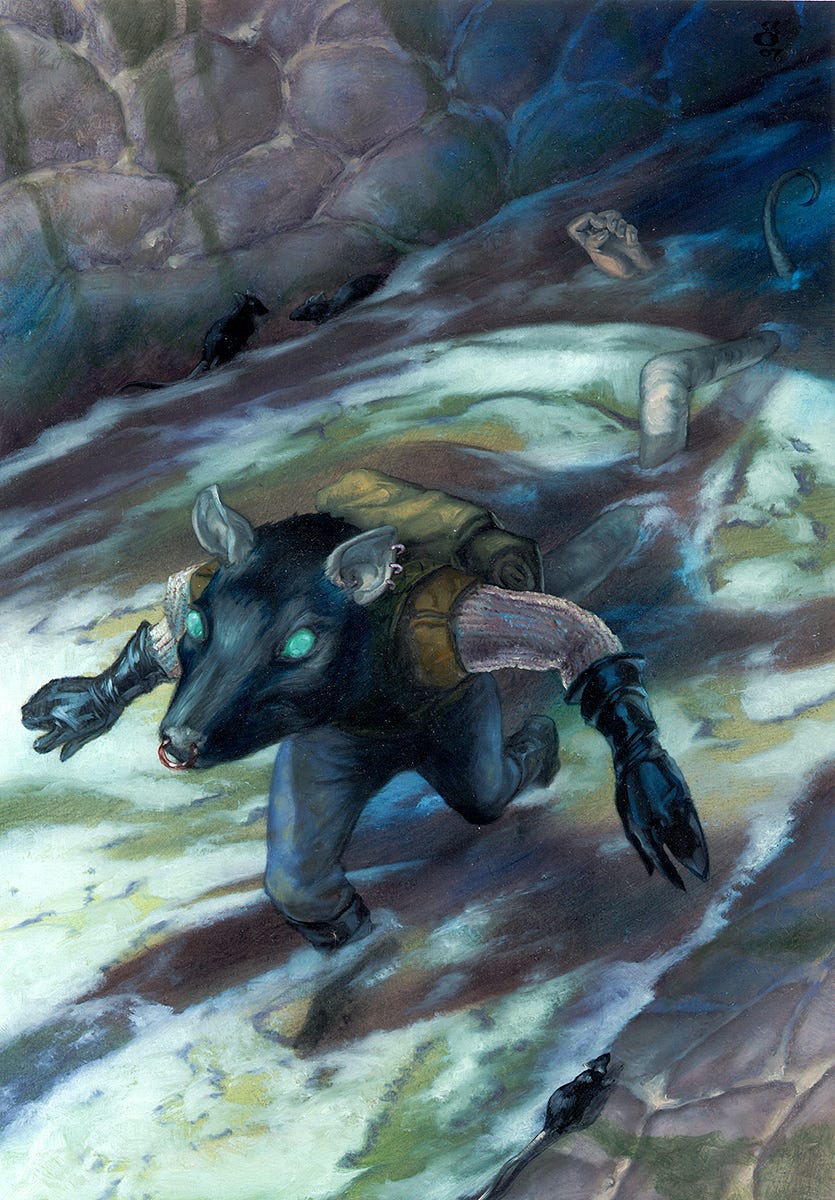
Owing to the pay, primarily, I tended to keep the paintings on the small side. This would grow frustrating over time, and I’d start to increase their size over my tenure on the game, starting with 4th edition, which we began working on the following year.
I couldn’t tell you anything about this rat-boy character anymore, except that it was a lot of fun to work on the nasty, filthy, foamy water in this sewer.
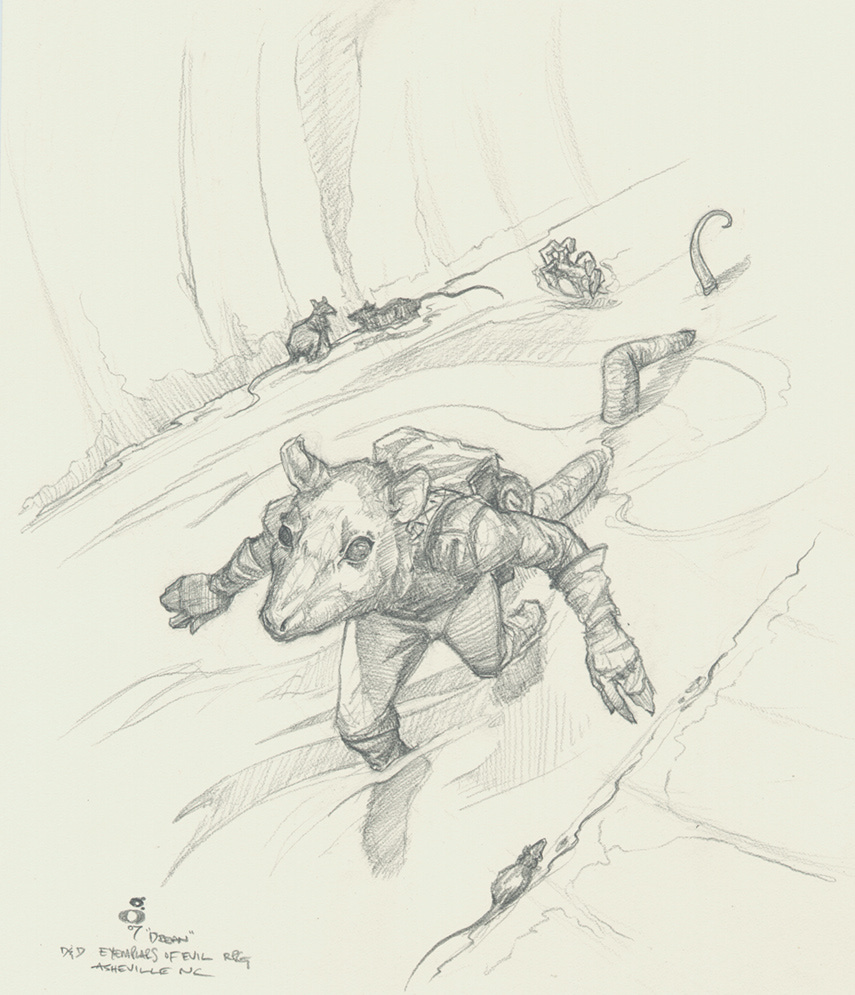
The drawing is a little clearer in showing his long tail ducking in and out of the shallow water as it trails behind him. A hand peeks out of the water and given the depth of this slurry, one can only assume that it is not attached to its person.
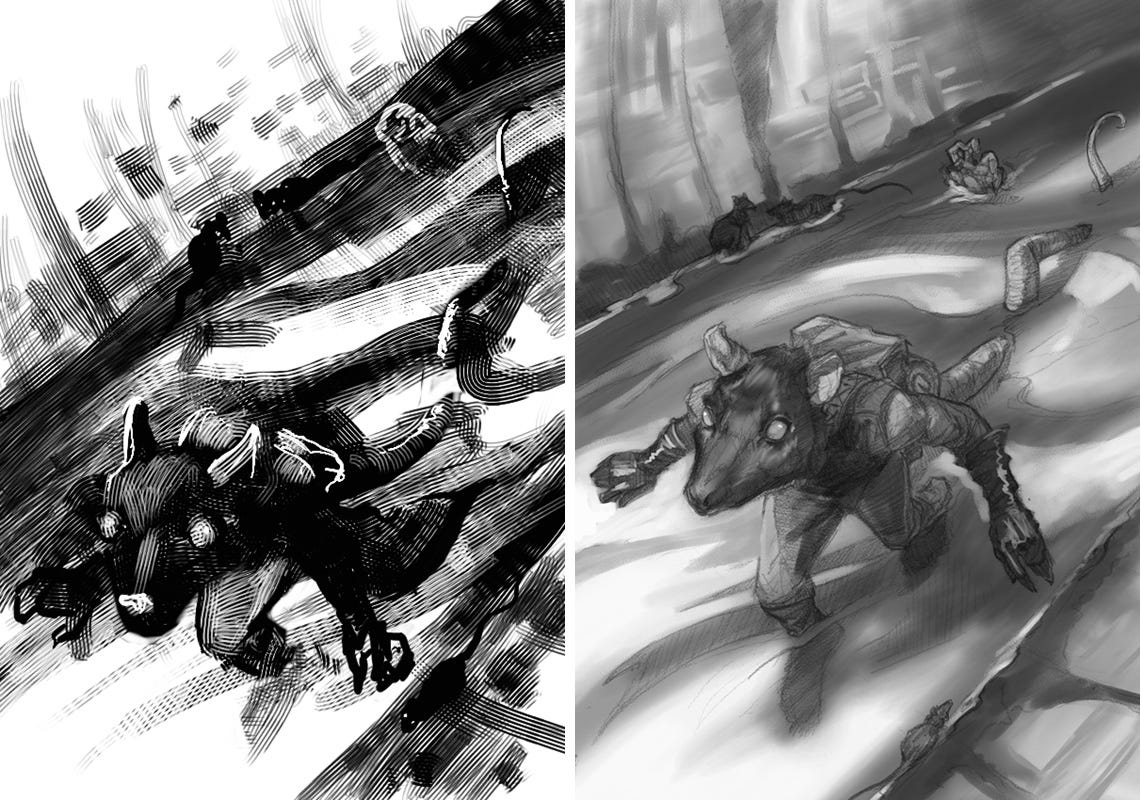
D&D illustrations, especially these smaller ¼ and ½ page ones, often had far fewer thumbnails than their Magic or larger illustration cousins. Again, finding ways to economize. Although, the thumbnail/idea portion is arguably among the most important steps. Certainly a number of D&D illustrations I did—heck, any number of illustrations I did, generally—would have benefited greatly from even 4-5 thumbnails versus the 1-3 these small pieces usually entailed.
But in illustration, everything is among the most important steps: concepting, working out the drawing, referencing, value and/or color study, and final art execution.
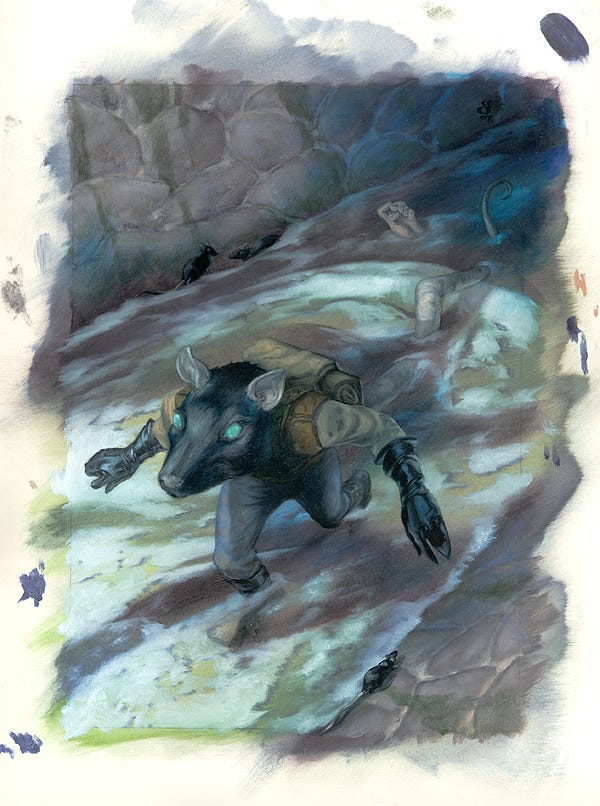
A lot of the D&D pieces in this era were painted on Arches Hot Press Watercolor paper, treated usually with PVA size to accept oil paints. This saved me the time of mounting the paper to panel, and really up to about 11x14” the paper is just fine without further support. Starting at 12x16” the sheets risked beginning to buckle a little, but even 12x16” generally held up fine.
Whereas I often mask off the image area, for these the border of the image was indicated when I printed my drawing out, and I often just overpainted the margins, and assuming I didn’t obliterate the line so fully that I couldn’t find it, it was easy to take a blade and trim the excess off at the end, which I did. But in cases like this, that meant a little extra actual background went in the trash!