D&D: Snake Cultist | Winged Elf (2005)
The beginning of a decade of D&D
Please enjoy today’s public post. I hope you’ll consider joining with a paid subscription to see new posts every weekday.
I played D&D in high school after being fascinated by the art of the game since 6th grade. I played in a campaign after school, and then DM’d another campaign at home with my brother and a few other friends. These campaigns essentially lasted until I met my now-wife Monica and we started dating when I was in 11th grade, at which point I basically lost interest in other things. Many such cases.
But the TSR studio artists including Elmore, Parkinson, and Easley, were a huge influence on me, the books valuable for their covers and interior illustrations as much as anything.
So I endeavored at some point to work on the game. Knowing they had in-studio illustrators, I didn’t even try to break in, even if by the time I was starting to illustrate many of the names had changed. Wizards of the Coast bought TSR, Inc., which owned D&D, in 1997, and for a time the studio artists continued in their roles.
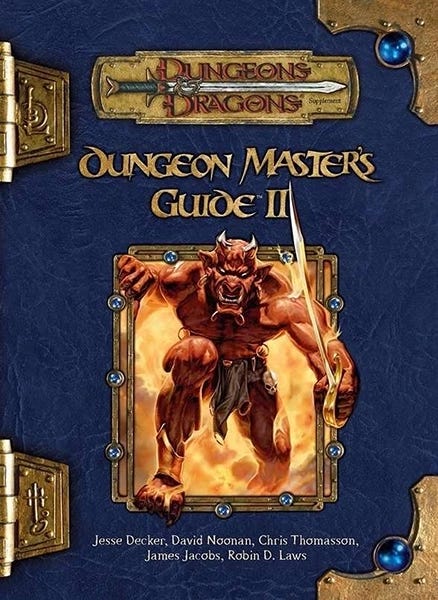
Eventually Wizards produced the Third Edition of the game internally, in 2000. At this time, I noticed some Magic artists had been folded into doing art on the game. When the 3.5 edition released the Dungeon Master’s Guide II in 2005, it was my turn to join the ship. I went on to contribute to 18 source books culminating in 2014’s 5th Edition Player’s Handbook, after which I moved on to other things with a change in season in my art.
For this first book I was given two spot character illustrations, which would float on the page, so their backgrounds were minimal to none.
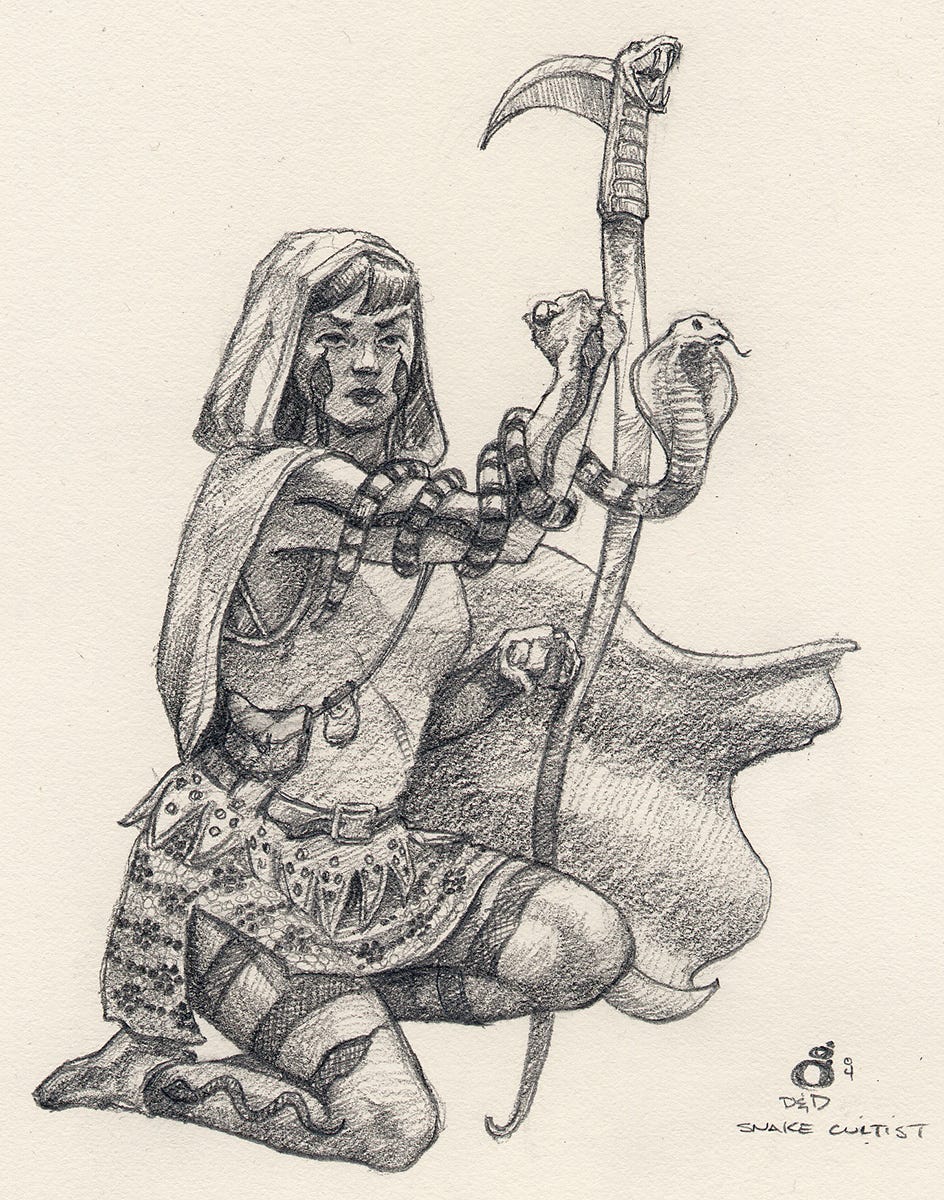
At this time Wizards had not begun producing extensive style guides for D&D and I was more or less allowed to create things as I pleased. I don’t recall much about the art request here, but I do remember it being fairly open-ended, which was great for spot illustrations which are numerous and supportive, but not integral to storytelling.
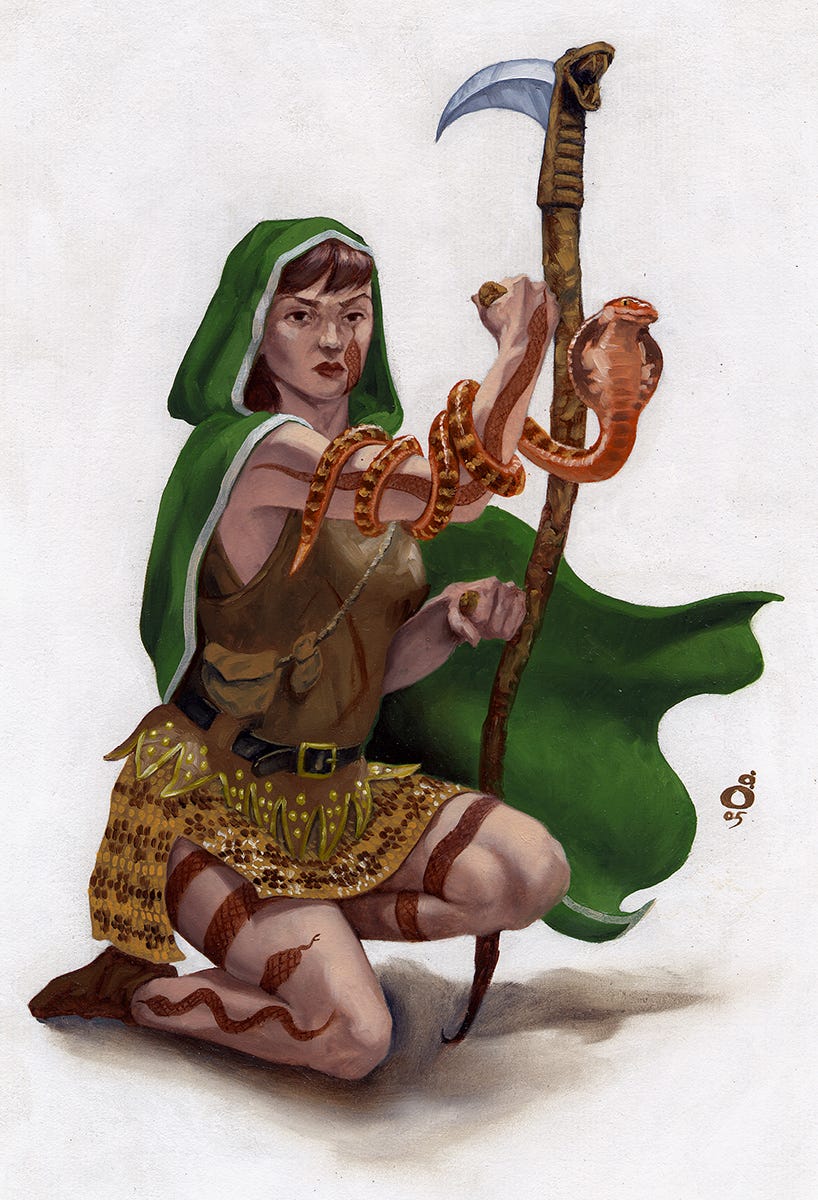
In this era I had moved to producing more detailed drawings, printing them out lightly on paper, mounting that paper to panel, and then prepping it for receiving oil paint. As such I had to paint the white in, versus working on preprimed masonite and transfering the drawing down. In retrospect, that was the time-consuming way to go of the two, given that I wanted the white to remain.
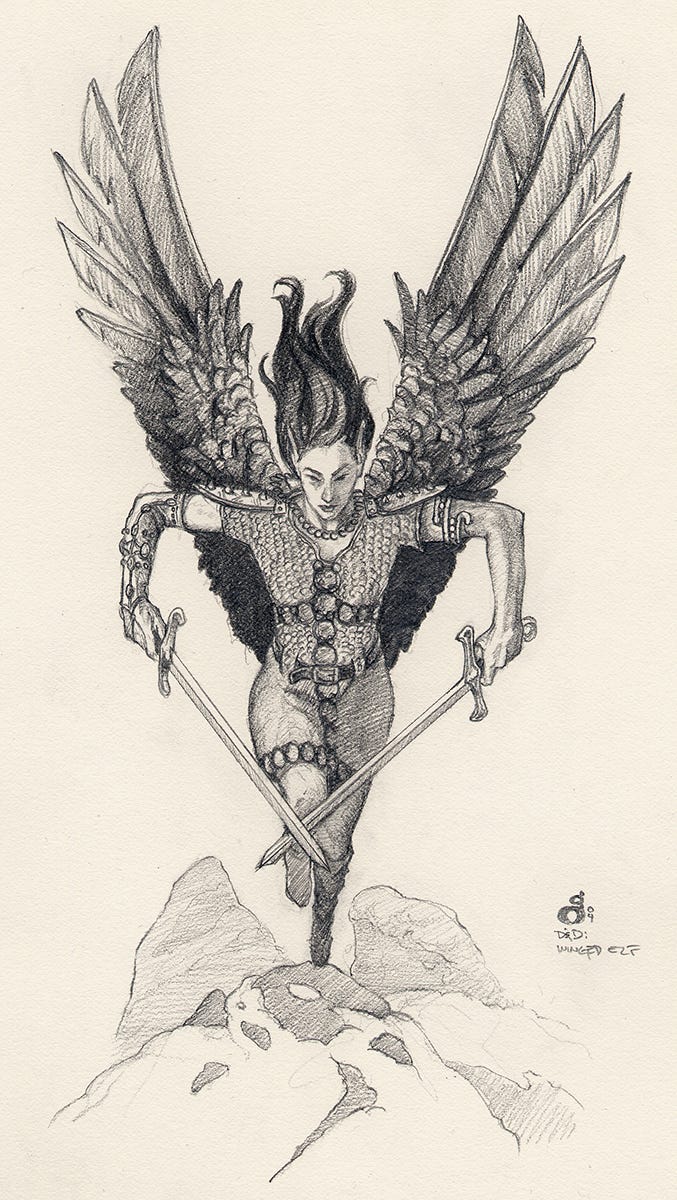
The Winged Elf piece has the Elf sort of launching into the air. Probably I needed a more from-above camera angle than I chose, to emphasize the foreshortening better. This was something I noted afterwards back then, so it’s always been harder to enjoy it. The Cultist was definitely the more successful of the two.
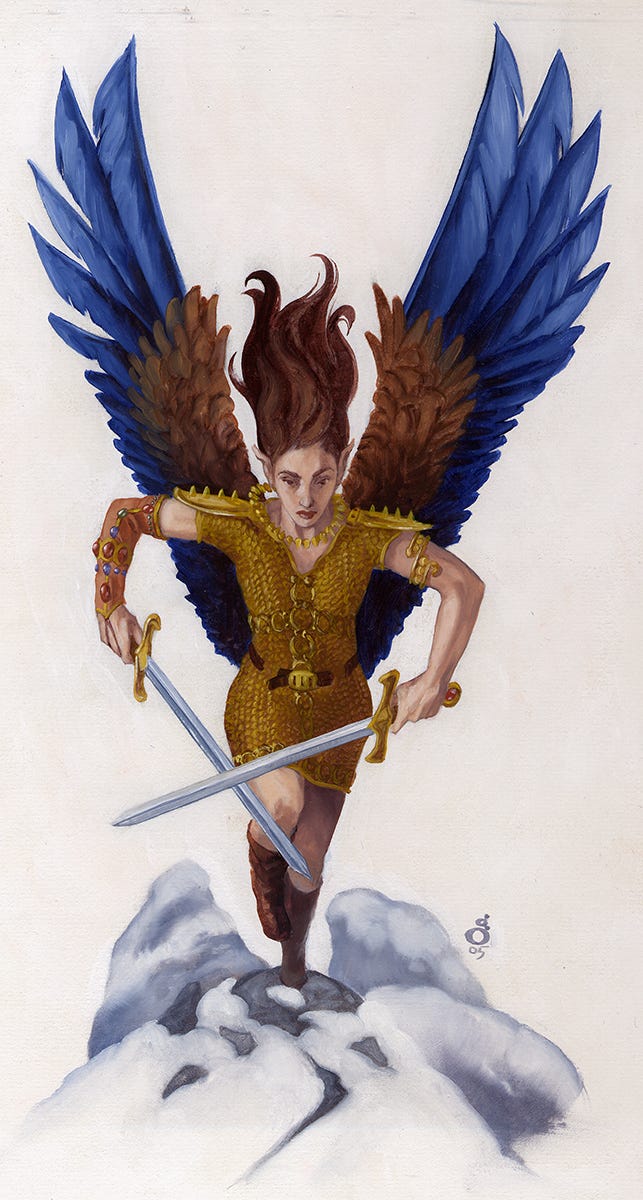
It was a good move to adjust the arms to be less symmetrical. As the white was going to be masked out, I had to keep my shapes with fairly crisp edges, so while I normally would blend the edges of the hair here and there into the white, here I left the shapes solid so they could be masked easier. Once I started working digitally, it would have been easier as I could have provided them with 100% white or transparent backgrounds and could accommodate those more subtle edges.