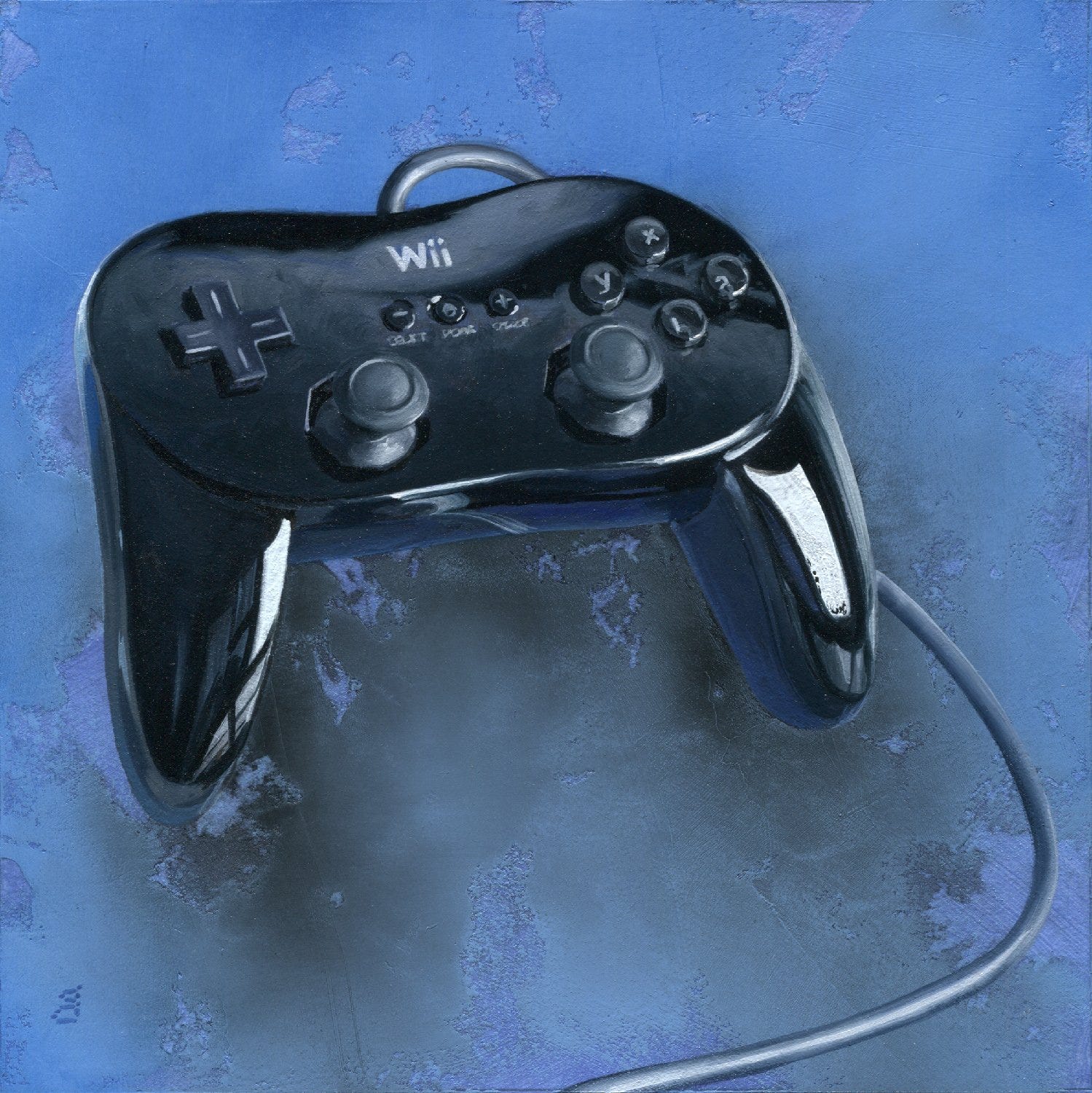
H4H: The Revolution Was Televised: Classic Form
My Virtual Arcade Go-to’s
Today’s post is part of a free preview of the daily post. Most daily posts will be for paid subscribers as we roll along. I hope you’ll consider joining with a paid subscription to see new posts every weekday.
• The original painting “Classic Form” is available for sale here
• The original painting “Pro Form” is available for sale here
When the Wii released way back in 2006, many were put off by its simplistic Wii Remote controller, having spent a decade or so already with twin analog sticks and increasing amounts of buttons. The Remote was intentional pushback against this creeping complexity. And it worked to an extent, inviting new and older players in even while it alienated some of the hardcore gamers.
Particularly when the Virtual Console came out, it became an obvious problem that games going back from the 16-bit era on, had already been designed with more buttons in mind, and analog sticks as well. So we got the Classic Controller.
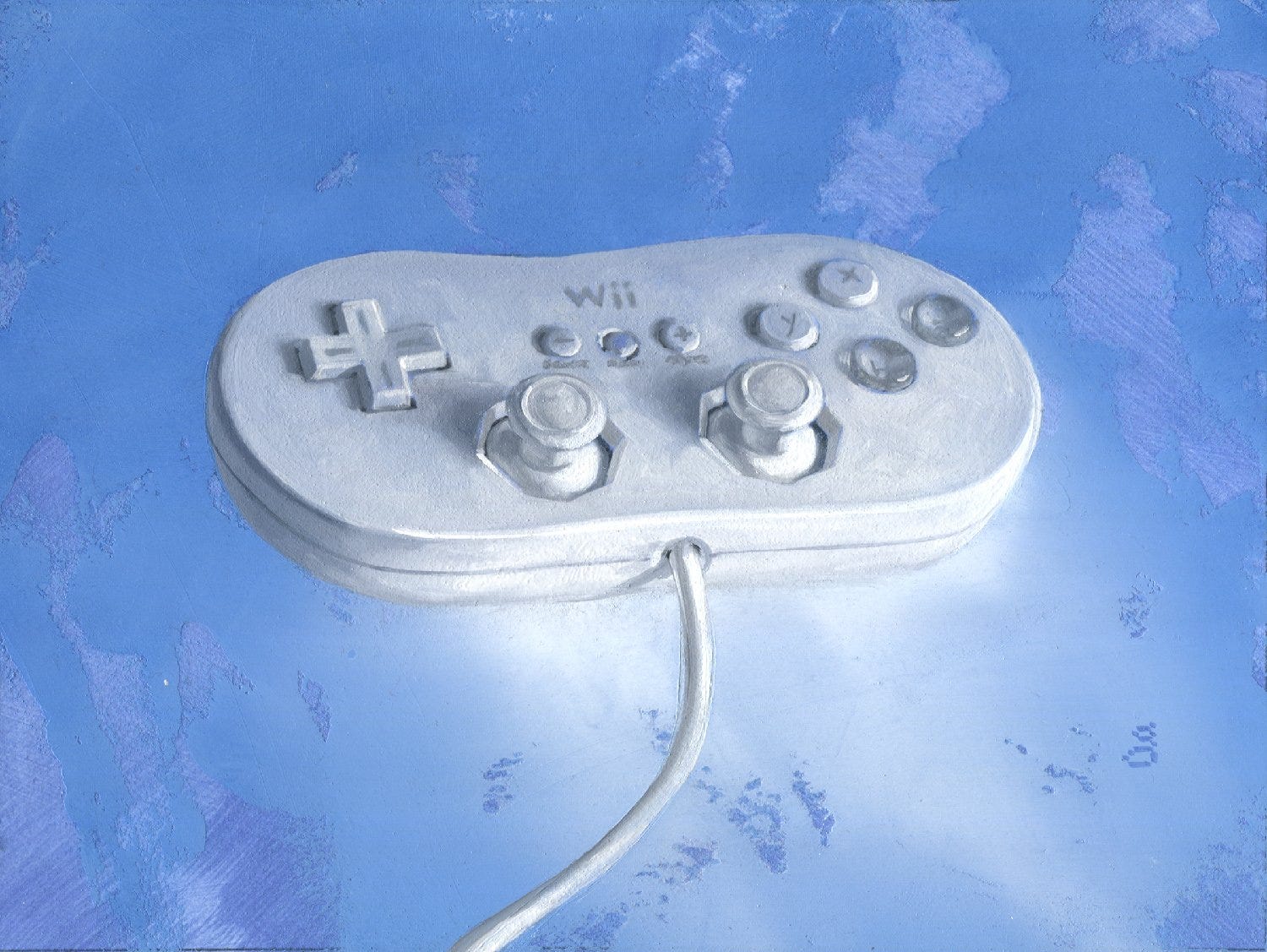
Depending on the hardware, I’ll always paint its base controller, but any significant controller revisions or official alternate controllers are fair game, and I’ll try to match them to the overall theme of that system’s paintings’ style.
The introduction of this controller solved some problems, certainly, even while its minimalist form factor was still out of touch with modern demands. So when they announced the Classic Controller Pro, I was immediately down for one. I played so much Monster Hunter Tri with this (and a bunch of other stuff). When I occasionally reach for a Wii game, if standard controls are allowed, I always have this plugged in.
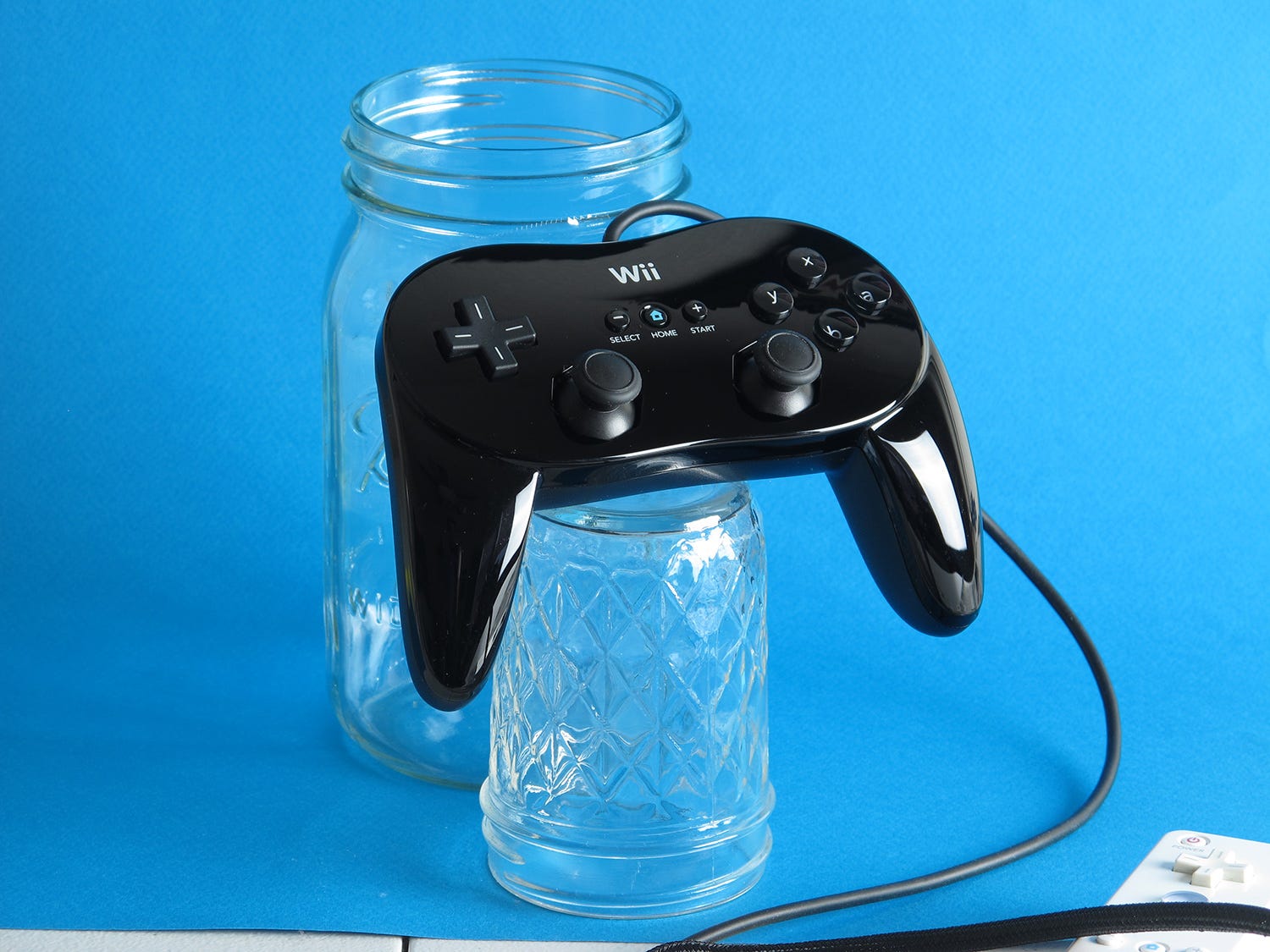
This series is based entirely on photographs I take of hardware I procure. I either buy the hardware, already own it, or occasionally someone commissions something I haven’t painted yet and they might even mail me their own hardware to paint!
In this entire set, I included some rudimentary 1980’s style motion blur, since the entire gag of the console was motion controls. When it came to the black controllers, this was a bit of a problem as motion blur for dark objects reads less well as being motion blur. Nevertheless, as these pieces often have abstracted backgrounds, it made a compositional element.