

H4H: The Standard | P1 | P2 (2015)
You had to be there
This post is public, so feel free to share it. I hope you’ll consider joining with a paid subscription to see new posts every weekday.
For a kid of the 80s, you might think that painting the NES would be first on the list. As it turns out, these were 10th-12th paintings. Since the series, such as it was, was just a few for-fun experiments using hardware I had around, it wasn’t until I’d done a few that I began in earnest, and the things I acquired were a little haphazard, timing wise.
But yes, though I cut my teeth on the Atari 2600, and then really spent a lot of time with the Colecovision, the NES, arriving as I was in Jr. High, was really timed just right for the quintessential 1980’s gaming experience.
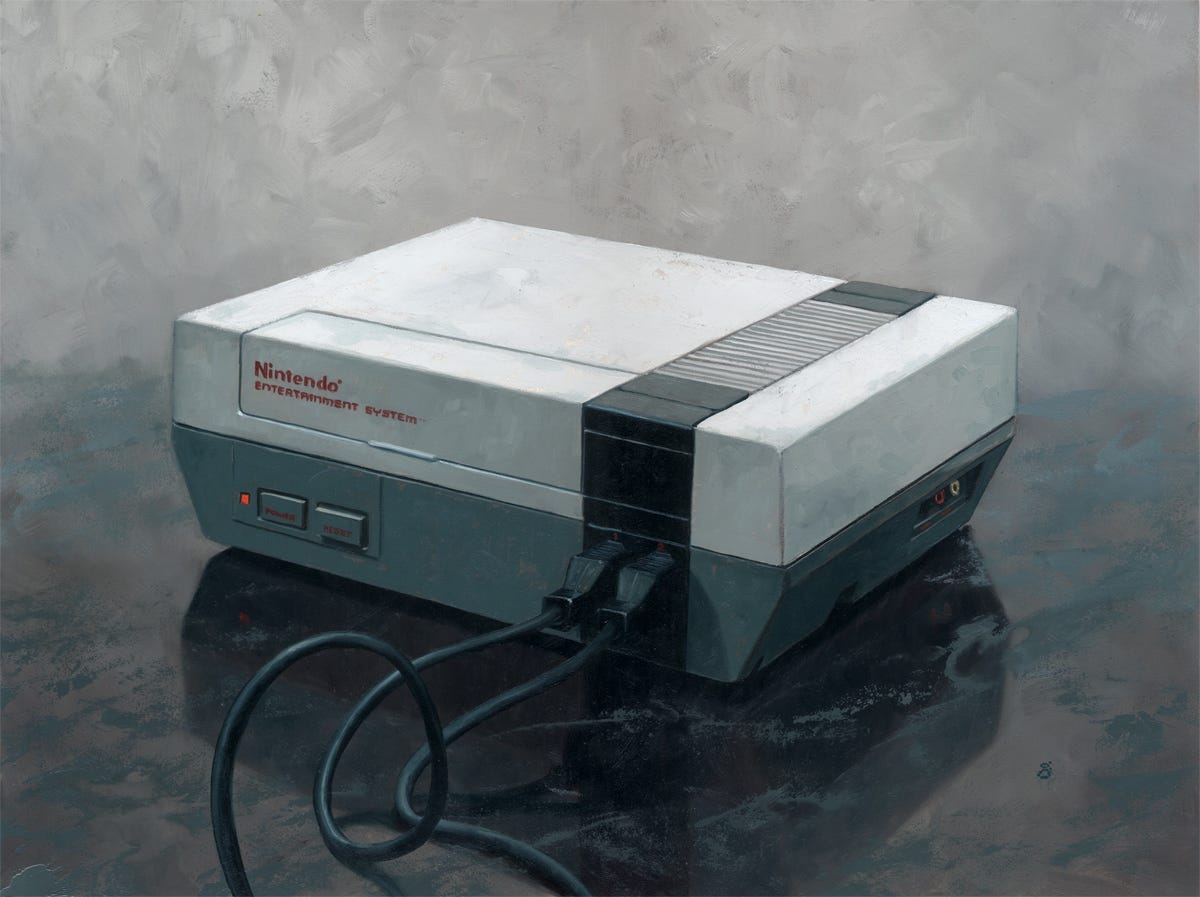
One of the artsy aspects of this painting series is about what still life painting does, namely, that it causes you to consider the objects outside of their daily context, where they might not be considered in and of themselves. Just as when you see bananas on your countertop day after day, then see a still life of one and the nature of painting causes you to maybe really look at it in a way you never had before.
This was not unknown to me. As a kid, when the NES quietly appeared in stores towards the end of 1986, with little fanfare yet, I recall standing rapt before the glass case where it was being displayed at a local toy store. It is hard to describe the feelings that this plastic object inspired, and that without even seeing any gameplay on a television. No, it was simply the industrial design, the packaging, the graphic design. It was numinous.
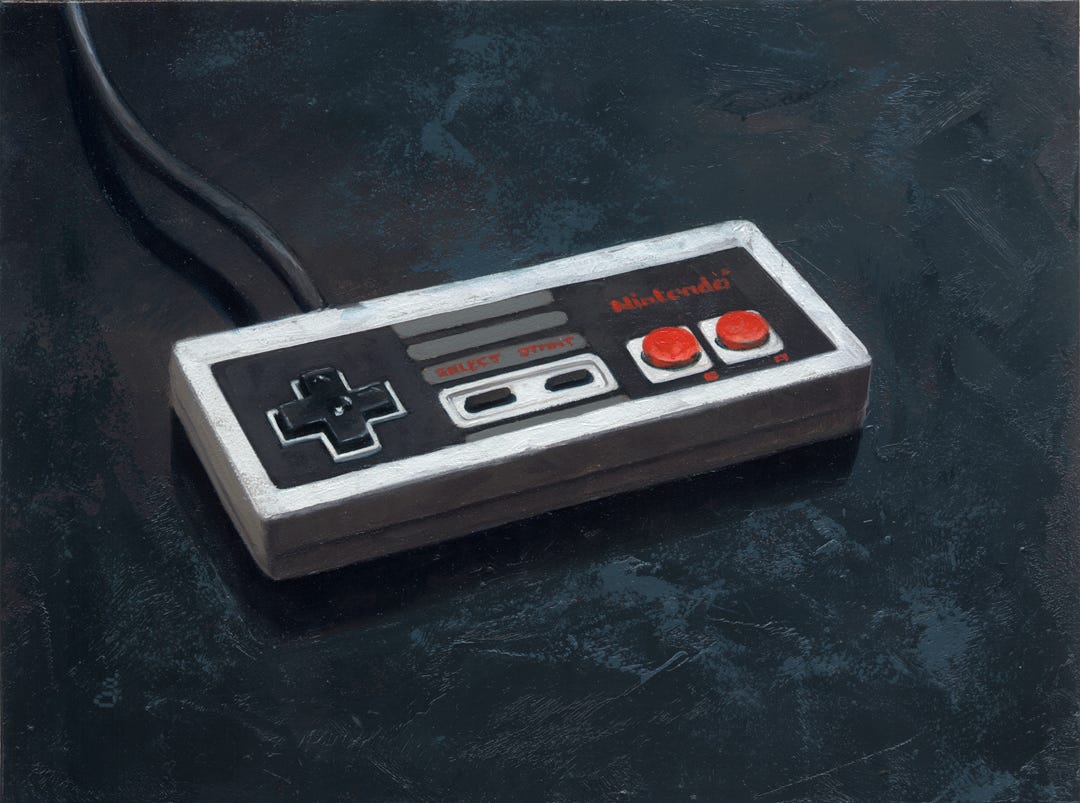
It was this feeling I had before that case as a kid—a feeling I had more than once in my history of videogames, even before I was 12 (and at other times as well)--that was a prime motivator in beginning this series at all. Because much has been said, written, drawn, about the games these machines played, and the characters within them—they have thoroughly soaked through our popular culture. But the hardware itself has taken more of a back seat as objects of consideration.
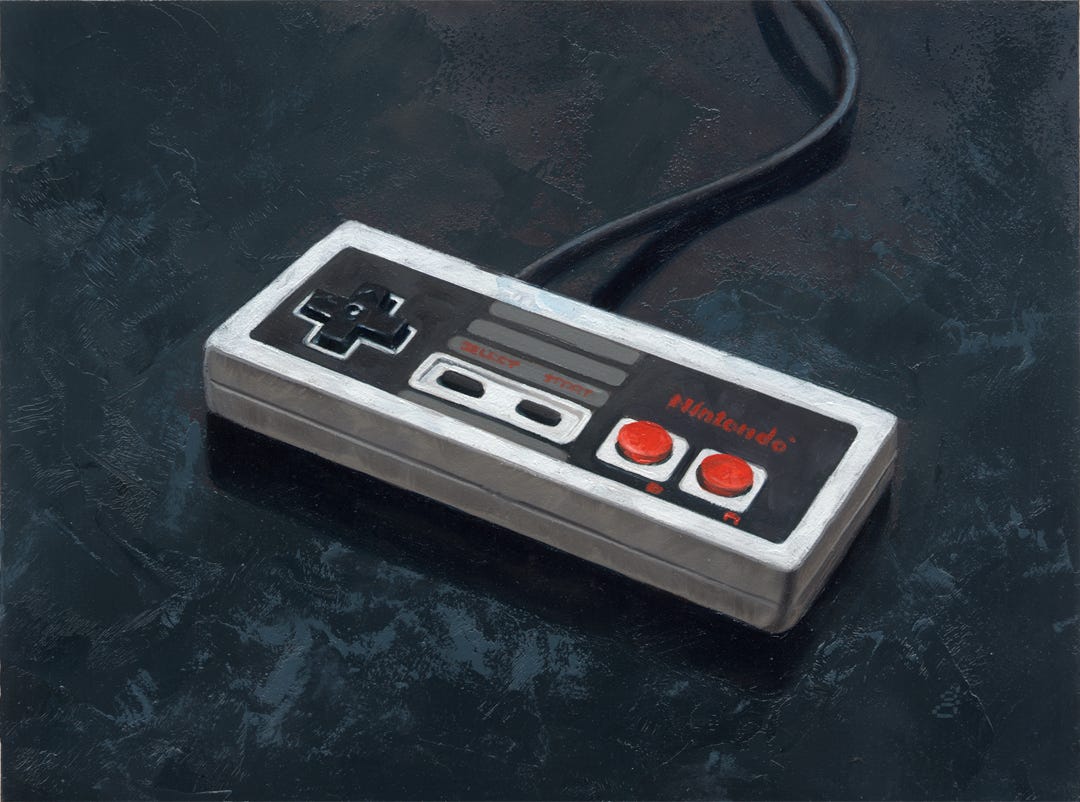
In painting the console and its two identical controllers—because one rule I’ve had is to always paint as many controllers as were allowed by the hardware—I knew that there were a few other pieces from this generation that I’d have to paint. And I did paint the Zapper lightgun later. But as for the last 3 pieces, it’s taken me 11 years to circle back to them, in part because I didn’t want this hardware to dominate the series, as it dominated the landscape of the era.