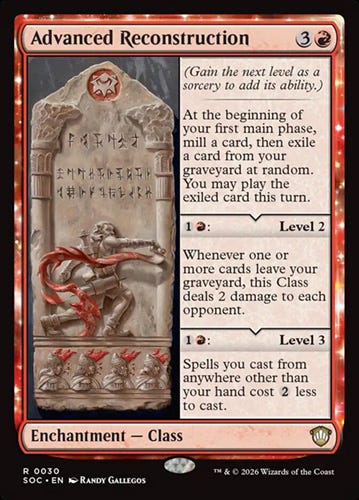
MTG: Advanced Reconstruction (2024)
More art than needed
Today’s post is public, so feel free to share it. I hope you’ll consider joining with a paid subscription to see new posts every weekday.
The original painting for Advanced Reconstruction is available in the shop.
My second of two Saga illustrations for Secrets of Strixhaven was a purely representational affair—there was no funny business with other materials as there was with Intermediate Chirography, previously discussed.
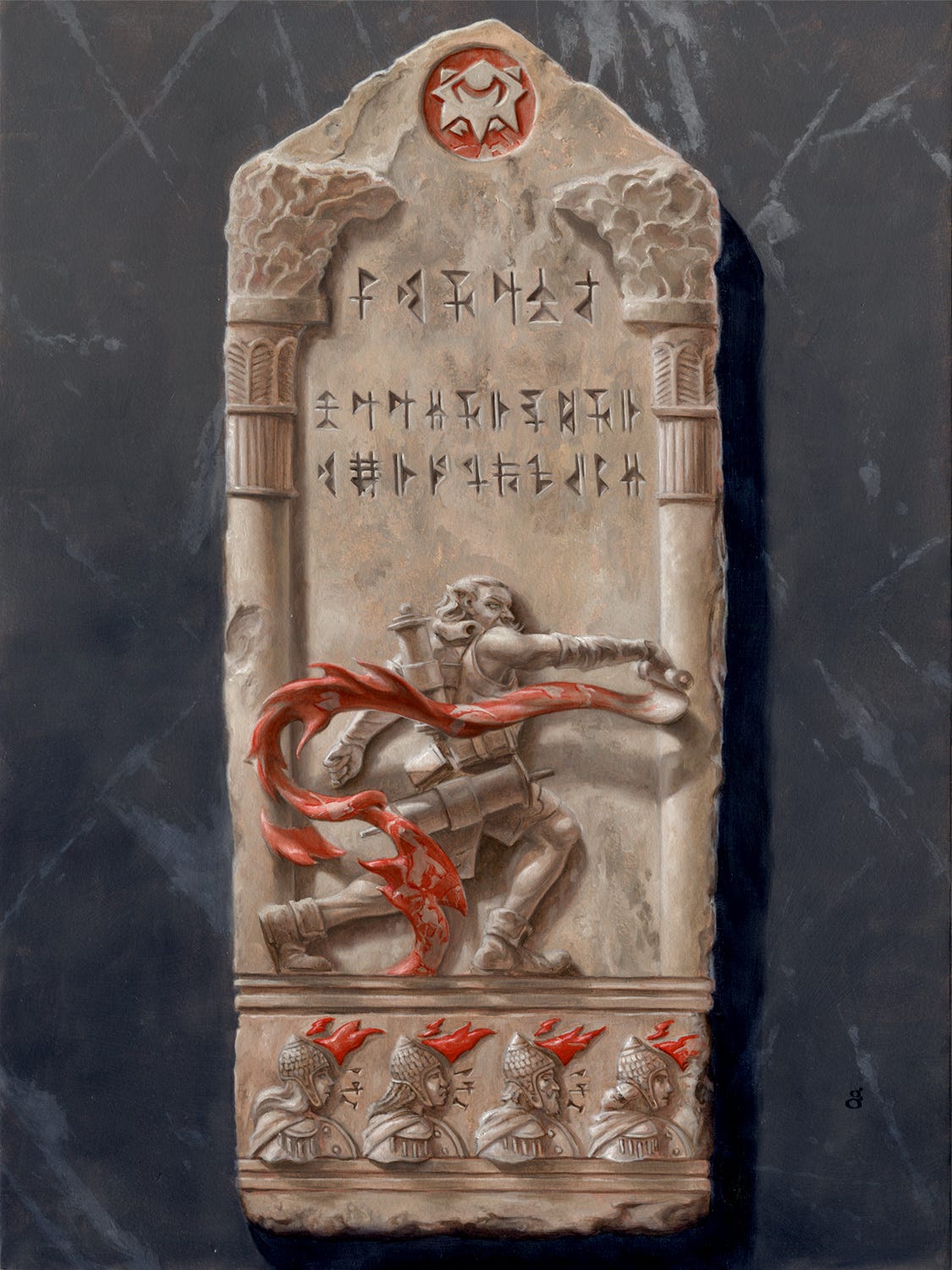
In this case, we are shown a stone tablet engraved and sculpted in low and medium relief. There are hints of parts of it having been painted in red, but it’s begun chipping off in places. Throughout art history, it was surprising to learn that many statues and such that we know as just made of stone, were actually painted, sometimes garishly so. The script carved in here is an in-world variety, but of course says nothing real.
Whereas the other illustration was sitting on a table with its deep wood grain, here I have this tablet resting on a smooth slate surface. And whereas these Saga artworks are of an unusual tall and thin size, I used the background surface in both cases as an excuse to extend the art sideways so as to make the original art a more frame-ready size for whoever the eventual owner of the painting might be.
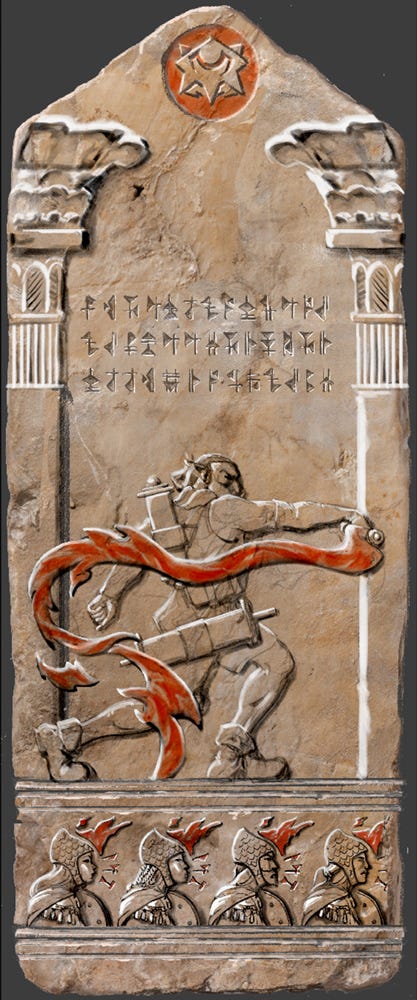
In both of these Strixhaven illustrations, they were sent to Wizards of the Coast as digital preliminary images, using photo textures and such as stand-ins. You can see that the scroll the Orc is holding here, which unfurls into red magic, is very low relief, whereas in the final you can see it was carved deeper, as if you could put a finger behind it in the gap between it and the tablet itself. This was due to the influence of seeing some wonderful examples of medieval and similar European relief sculptures, which sometimes had a surprising amount of depth to them, versus some of the large bas-relief carvings one sees in ancient near-eastern civilizations, which tend to have a shallower profile.
It was of course tempting to take these digital starts and then just polish them up for final, versus starting from scratch again to make a physical artifact.